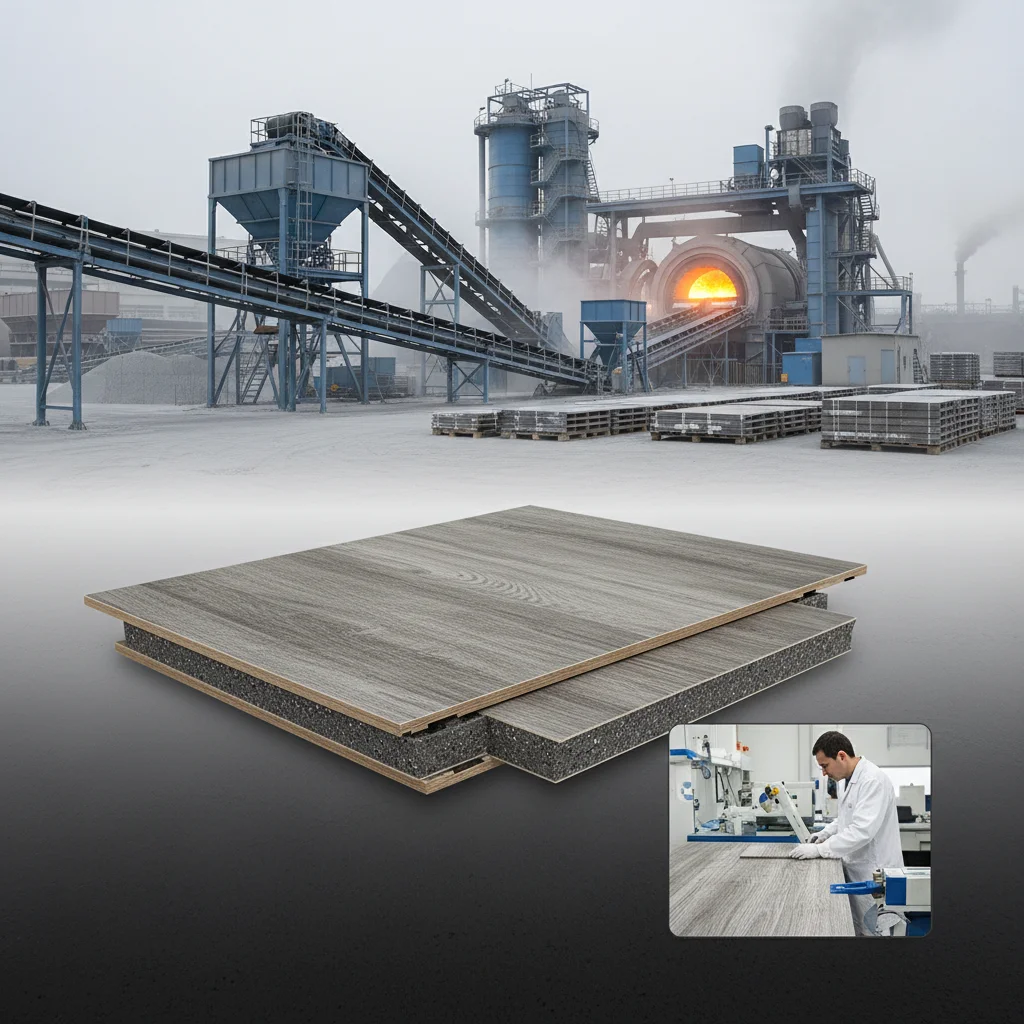
Identifying a reliable Cork floor Exporter is a critical step for architects, interior designers, and commercial developers seeking sustainable, high-performance flooring solutions. As global construction shifts toward eco-friendly materials within the non-metallic mineral products industry, cork has emerged as a premier choice due to its natural elasticity, thermal insulation, and carbon-sequestering properties.
The primary challenge for international buyers is navigating the complexity of supply chains to find exporters who can guarantee consistent density, moisture resistance, and compliance with international building standards. Sourcing high-grade cork requires more than just a product list; it demands a partner capable of managing logistics from the Mediterranean clusters to global delivery hubs.
This professional analysis provides a framework for evaluating cork flooring suppliers, detailing technical specifications, procurement risks, and the operational advantages of integrating sustainable cork solutions into modern building projects.

Fundamental Criteria for Selecting a Cork Exporter

When evaluating a Cork floor Exporter, buyers must look beyond basic pricing and focus on the vertical integration of the supplier's operations. A high-tier exporter typically maintains strong links with the raw material extraction sites and processing plants, ensuring that the cork bark is harvested sustainably and processed with precision to maintain cellular integrity.
Reliability is further determined by the exporter's ability to provide detailed technical data sheets (TDS) and material safety data sheets (MSDS). Companies like Shanghai Weibangxun International Trade Co., Ltd. emphasize the importance of a robust supply chain, utilizing strategic logistics hubs to bridge the gap between specialized manufacturing clusters and global demand, which reduces lead times and minimizes transport-related damage.
Analyzing Technical Specifications of Export-Grade Cork
Technical quality in cork flooring is defined by density, thickness consistency, and the type of binding agents used. Export-grade cork is generally categorized into agglomerated cork, which consists of granules bound together, and sliced cork, which maintains the natural grain of the bark. The density directly affects the load-bearing capacity and the longevity of the floor in high-traffic areas.
Furthermore, the surface treatment is a decisive factor for durability. Buyers should specify whether they require UV-cured lacquers, wax finishes, or raw cork for custom sealing. Proper sealing prevents moisture penetration, which is the primary cause of warping in non-mineral building materials. Ensuring the exporter adheres to strict dimension tolerances is essential for seamless installation across large commercial surfaces.
Application Scenarios for Commercial and Residential Use
Cork flooring serves diverse needs across the building materials sector. In residential settings, its acoustic insulation properties make it ideal for bedrooms and living areas, reducing impact noise and providing a warmer underfoot feel compared to ceramic tiles or polished concrete. Its hypoallergenic nature also benefits health-conscious environments.
In commercial applications, such as offices, libraries, and healthcare facilities, cork's natural antimicrobial properties and ergonomic support for standing workers provide significant operational value. When integrated with other decorative materials and board-type products, cork creates a cohesive, sustainable interior design that meets modern green building certifications (such as LEED or BREEAM), enhancing the overall asset value of the property.
Comparative Evaluation of Flooring Material Performance
To understand the value proposition of a Cork floor Exporter, it is necessary to compare cork against other common building materials based on relative performance indices. This illustrative framework evaluates materials across five key dimensions: acoustic dampening, thermal resistance, installation speed, durability, and sustainability.
The data above represents a normalized performance index where higher values indicate superior performance in that specific category. While traditional hard surfaces may lead in raw durability, cork significantly outperforms them in acoustic and thermal efficiency, making it the superior choice for wellness-oriented architecture.
Logistics and Compliance in International Sourcing
International trade in building materials involves rigorous compliance checks. A professional Cork floor Exporter must manage the complexities of customs clearance and ensure that all packaging meets international shipping standards to prevent humidity-induced degradation during sea transit. Palletization and moisture-barrier wrapping are non-negotiable requirements for long-haul shipments.
From a regulatory perspective, buyers must ensure that the cork is sourced from certified sustainable forests. Compliance with the Lacey Act (in the US) or EUTR (in Europe) is essential to avoid legal risks associated with illegal logging. Exporters who provide full traceability documentation offer a significant layer of security for the importer, ensuring that the project remains compliant with environmental laws.
Common Procurement Risks and Mitigation Strategies
The most frequent risk in cork procurement is the variation in batch color and texture, which can lead to visible seams in large installations. To mitigate this, buyers should request a single-lot production run for a specific project and demand a sample board from the actual production batch before the final shipment leaves the exporter's warehouse.
Another risk involves the failure of adhesive bonds due to incompatible subfloor moisture levels. Professional exporters provide installation guidelines that specify the maximum allowable moisture content of the substrate. By following a strict "Prepare-Verify-Install" workflow, procurement managers can avoid costly replacements and warranty claims after the project is handed over to the client.
Strategic Decision Framework for Material Procurement
Choosing the right cork flooring type depends on the balance between budget, expected foot traffic, and the desired aesthetic. The following matrix provides a qualitative comparison to assist procurement officers in making an informed decision based on the application environment.
| Flooring Type | Wear Resistance | Primary Use Case | Key Consideration |
|---|---|---|---|
| Sliced Cork | Moderate | Low-traffic Residential | Natural grain variation |
| Agglomerated | High | Commercial Offices | Consistent appearance |
| Cork Vinyl (LVT) | Very High | Retail/Healthcare | Synthetic top layer |
| Cork Tiles | High | Studio/Gallery | Adhesive requirement |
| Floating Plank | Moderate | Apartments/Hotels | Subfloor flatness |
| Industrial Cork | Maximum | Warehouses/Labs | High density specs |
Ultimately, the selection should be driven by the total cost of ownership, including installation and long-term maintenance, rather than the initial per-square-meter price provided by the exporter.
Frequently Asked Questions
Verify sustainability by requesting FSC (Forest Stewardship Council) or PEFC certifications. Ensure the exporter can provide documentation proving that the cork bark is harvested without harming the cork oak trees, usually every nine years.
Sliced cork is a thin layer of natural cork bark, offering a unique, organic look. Agglomerated cork is made from granulated cork particles compressed with binders, providing higher density and a more uniform appearance suitable for heavy-duty use.
Yes, provided it has a high-quality waterproof sealant. For high-moisture areas, it is recommended to use cork-vinyl hybrids or ensure the exporter provides a product with a polyurethane factory finish.
Excessive humidity or temperature fluctuations during transit can cause swelling or mold. Professional exporters use vacuum sealing or moisture-resistant wrapping and reinforced pallets to maintain material stability.
Regular sweeping and damp mopping with pH-neutral cleaners are required. Depending on the traffic level, the surface may need re-sealing every 3-5 years to maintain its water-resistant properties.
Request a "Single Batch" order from your exporter. If multiple batches are necessary, ensure the exporter performs a color-matching quality check and provides a sample from each batch for your approval.
Conclusion
Selecting a professional Cork floor Exporter is a strategic decision that impacts the longevity, sustainability, and aesthetic quality of any building project. By focusing on technical specifications, sustainability certifications, and logistical reliability, procurement managers can successfully integrate this unique material into modern architectural designs.
For detailed product specifications and customized building material solutions, professionals can explore the available resources at www.wbxbuilding.com to ensure their project meets the highest standards of efficiency and environmental responsibility.