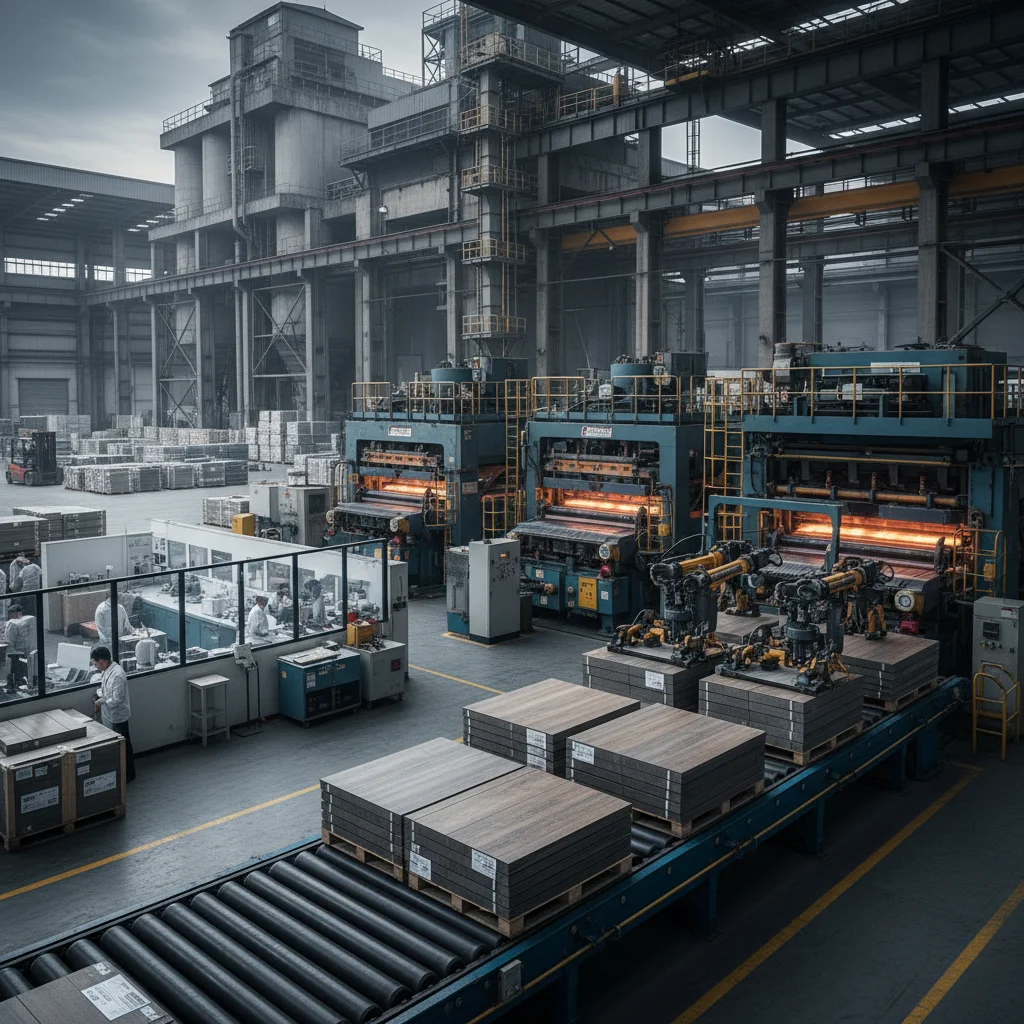
A Click lock floor Exporter specializes in the global distribution of advanced interlocking flooring systems that eliminate the need for traditional adhesives. These systems use a precise tongue-and-groove mechanism, allowing planks to snap together securely, which significantly reduces installation time and labor costs for large-scale commercial and residential projects.
For procurement managers and construction firms, selecting the right exporter is critical to ensuring material consistency, adherence to international safety standards, and logistics efficiency. The shift toward modular flooring is driven by the demand for rapid deployment and the ability to replace individual sections without dismantling the entire floor, addressing a major pain point in building maintenance.
This technical guide provides an in-depth analysis of click-lock technology, procurement criteria for sourcing from international exporters, and a comparison of material performance to help you make an informed decision for your next architectural or interior design project.

1Understanding Click-Lock Flooring Mechanics

Click-lock flooring operates on a mechanical fastening principle where the edges of each plank are engineered with a mating profile. When pressed together, these profiles lock tightly, creating a stable surface that resists shifting. This "floating floor" concept means the material is not bonded to the subfloor, allowing for natural expansion and contraction due to temperature changes.
The precision of the lock depends heavily on the manufacturing technology used by the exporter. High-quality CNC milling ensures that the tolerances are tight, preventing gaps from appearing between planks, which is essential for maintaining water resistance and aesthetic continuity.
From a structural perspective, this system distributes weight across the interlocking network, reducing the pressure on any single point of the floor and enhancing the overall longevity of the installation in high-traffic areas.
2Core Advantages of Interlocking Systems
The primary value proposition of sourcing from a professional Click lock floor Exporter is the dramatic reduction in installation complexity. Because no glues or nails are required, the installation is "dry," meaning there are no toxic fumes from adhesives and no waiting period for drying, allowing the space to be used immediately.
Furthermore, the modular nature of click-lock floors allows for easy disassembly. In commercial settings, this means that if a specific section of the floor is damaged, it can be unclicked and replaced without impacting the surrounding area, which is a significant advantage over monolithic flooring.
Durability is also enhanced through the use of high-density cores. Most modern exporters provide products with integrated underlayment, which improves sound insulation and provides a thermal barrier, making the environment more comfortable for occupants.
3Primary Application Scenarios and Use Cases
Click-lock flooring is exceptionally versatile, making it a preferred choice for residential renovations where speed is essential. In kitchens and bathrooms, water-resistant click-lock vinyl (SPC) is used to provide the look of wood or stone without the risk of warping from moisture exposure.
In the commercial sector, these systems are deployed in retail stores and office spaces. The ability to quickly update the look of a store by replacing flooring planks allows brands to adapt their interiors to seasonal marketing campaigns with minimal disruption to business operations.
Industrial applications include temporary exhibition booths and pop-up shops. The portability of the interlocking system allows the floor to be transported, installed, and then recovered for reuse in different locations, maximizing the ROI of the material investment.
4Performance Benchmarks and Technical Data
Evaluating a Click lock floor Exporter requires looking at specific performance metrics. Key indicators include the wear layer thickness (measured in mils), which determines the floor's resistance to scratches and abrasions, and the AC (Abrasion Class) rating for laminate products.
The mechanical strength of the lock itself is another critical data point. High-performance locks are tested for "pull-out" strength to ensure that the planks do not separate under heavy lateral loads, such as when moving heavy furniture or machinery.
Click lock floor Exporter Performance Metrics
When analyzing the data, it is evident that professional export-grade systems outperform generic alternatives in installation speed and water resistance. This is largely due to the use of superior polymers in the core and more precise molding processes during production.
5Procurement Strategy for International Sourcing
When sourcing from an international exporter, the focus must be on quality certification and supply chain reliability. Ensure the exporter complies with standards such as ISO 9001 for quality management and CE or ASTM for material safety and performance.
Logistics plays a vital role in the total cost. Because flooring is heavy and bulky, optimizing container loading and choosing exporters with proximity to major ports (like Qingdao or Shanghai) can significantly reduce shipping costs and lead times.
Finally, establish clear terms regarding the Minimum Order Quantity (MOQ) and customization options. Many exporters can provide customized colors or textures to match a specific brand identity, provided the order volume meets their production thresholds.
6Future Trends in Modular Floor Export
The industry is moving toward sustainable and "circular" materials. We are seeing a rise in the export of bio-based click-lock floors that use recycled plastics and natural fibers, reducing the carbon footprint of the construction process without compromising durability.
Digital integration is another emerging trend. Some high-end exporters are developing flooring systems with embedded sensors for smart-home applications, allowing for the tracking of foot traffic or the detection of leaks beneath the floating floor layer.
Additionally, the "DIY" market is expanding globally, leading exporters to redesign packaging and installation guides to be more accessible to non-professional users, further driving the demand for intuitive click-lock systems.
7Comparative Analysis of Flooring Technologies
Choosing between click-lock systems and traditional options depends on the specific needs of the project. While glue-down floors offer maximum stability in extreme industrial settings, they lack the flexibility and speed of interlocking systems.
Comparing different click-lock materials—such as Laminate, LVP (Luxury Vinyl Plank), and SPC (Stone Plastic Composite)—reveals distinct trade-offs in terms of feel, water resistance, and cost.
| Material Type | Installation Speed | Water Resistance | Best Use Case |
|---|---|---|---|
| Laminate | Fast | Moderate | Living Rooms/Bedrooms |
| LVP (Vinyl) | Fast | High | Kitchens/Offices |
| SPC (Stone Core) | Fast | Extreme | Bathrooms/Commercial |
| Engineered Wood | Moderate | Low-Moderate | Luxury Residential |
| WPC (Wood Plastic) | Fast | High | Basements/Wet Areas |
| Traditional Glue-down | Slow | Varies | Industrial/Heavy Load |
Ultimately, the decision should be based on a balance of budget, the expected lifespan of the installation, and the environmental conditions of the room. For most modern applications, the SPC variant from a reputable exporter provides the best overall value.
Frequently Asked Questions
Conclusion
Selecting a reliable Click lock floor Exporter is a strategic decision that impacts both the initial construction timeline and the long-term maintenance of a facility. By focusing on mechanical precision, material certification, and logistics efficiency, procurement teams can implement flooring solutions that are not only cost-effective but also highly durable and adaptable.
For those evaluating the most suitable modular flooring solutions for their specific project requirements, detailed product specifications and sourcing options can be reviewed at www.wbxbuilding.com.