Advanced Exterior wall panel Solutions for US Infrastructure

Advanced Exterior wall panel Solutions for US Infrastructure

Integrating high-performance building envelopes and thermal efficiency for the North American architectural landscape.

Advanced Exterior wall panel Solutions for US Infrastructure

Providing precision-engineered architectural materials designed to withstand diverse North American climates while maximizing energy efficiency and acoustic comfort.

The State of Building Material Manufacturing in the United States

Navigating the complexities of regional climate zones and stringent energy codes.

The US market is currently characterized by a rigorous transition toward LEED certification and Net Zero energy goals. In regions like the Northeast and Midwest, there is an urgent demand for high-R-value Insulated glass to combat extreme winter temperatures, while the Sun Belt focuses on heat reflection and UV resistance.

Labor shortages in the construction sector have accelerated the shift toward prefabricated components. This has led to a surge in the adoption of Extrusion profile systems that allow for faster on-site assembly and reduced waste, aligning with the US push for sustainable "green" building practices.

Urbanization in major hubs like New York and Chicago has heightened the need for acoustic mitigation. The integration of the Soundproof panel has moved from a luxury feature to a standard requirement for multi-family residential projects to ensure privacy and mental well-being in dense environments.
Evolution and Technical Trajectory of Building Envelopes

From traditional masonry to intelligent, multi-layered composite systems.

Market Development History

In the mid-20th century, US construction relied heavily on single-pane glass and heavy timber or brick. The focus was on structural stability rather than thermal performance, leading to massive energy inefficiencies in early suburban developments.

The 1980s and 90s marked a pivot toward synthetic materials and double-glazing. This era saw the introduction of basic Indoor flooring options like early laminates, shifting the focus toward durability and ease of maintenance for the growing middle-class housing market.

Since 2010, the trajectory has moved toward "Active Envelopes." The development of high-precision aluminum Extrusion profile technology has enabled the creation of thermally broken frames, drastically reducing heat transfer and supporting the modern aesthetic of glass-heavy skyscrapers.

Future Development Trends

Carbon-Negative Materials

The industry is moving toward bio-based composites and recycled minerals to reduce the embodied carbon of exterior cladding.

Smart Acoustic Adaptation

Future sound management will evolve from passive absorption to active noise-canceling materials integrated directly into wall systems.

AI-Driven Thermal Optimization

Dynamic glazing and panels that adjust transparency or insulation levels based on real-time weather data from IoT sensors.

Industry Trends and Future Outlook

Predicting the next frontier of non-metallic mineral products in North America.

Modular Prefabrication
Increasing reliance on off-site manufacturing to reduce US labor costs and project timelines.
Hyper-Insulation
Development of vacuum-insulated panels to meet extreme energy codes in Northern states.
Circular Economy
Closed-loop recycling for mineral-based building products to minimize landfill impact.
Smart-Skin Integration
Embedding sensors into exterior panels for structural health monitoring in seismic zones.

Industry Outlook

Based on Google search trends in the US, there is a significant increase in queries related to "sustainable building materials" and "home soundproofing." This suggests a shift in consumer preference toward health-centric and eco-friendly residential environments.

Over the next 3-5 years, we expect the convergence of material science and digital fabrication. The use of 3D-printed mineral components will likely reduce the reliance on traditional extrusion, allowing for organic, highly efficient thermal shapes that were previously impossible to manufacture.

Localized Application Scenarios in the USA

Practical implementations of advanced materials across diverse American terrains.

01. High-Rise Residential in New York City

Implementing Soundproof panel systems in luxury apartments to eliminate noise transfer between units and mitigate external street noise from Manhattan's dense traffic.

02. Energy-Efficient Offices in Seattle

Utilizing triple-pane Insulated glass and thermally broken frames to maintain internal temperatures during Pacific Northwest winters while maximizing natural light.

03. Industrial Warehouses in Texas

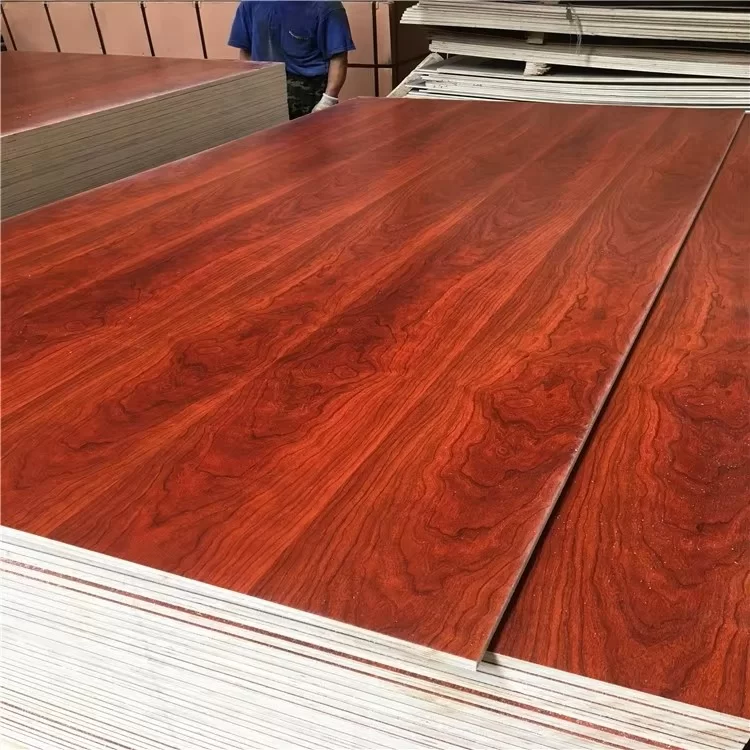
Deploying heavy-duty Exterior wall panel systems that offer high thermal mass to keep interior logistics hubs cool during extreme Texas heatwaves.

04. Modern Commercial Retail in Florida

Integrating impact-resistant glass and customized Extrusion profile frames designed to withstand hurricane-force winds and salt-air corrosion.

05. Sustainable Housing in California

Installing eco-friendly Indoor flooring made from recycled mineral composites to meet strict California green building standards and VOC emission limits.

Brand Story

Global Development Journey of Shanghai Xinshengyuan International Trade Co., Ltd.

Founding Vision

Established to bridge the gap between high-precision mineral manufacturing and the global demand for sustainable architectural solutions.

Technical Breakthrough

Invested in advanced extrusion and insulation technologies to solve the pain point of thermal leakage in large-scale commercial projects.

North American Expansion

Tailored our product lines to meet ASTM standards and US building codes, establishing a strong footprint in the US construction market.

Sustainability Pivot

Launched a dedicated line of carbon-neutral mineral products to support the global transition toward net-zero architecture.

Global Leadership

Now serving as a trusted partner for architects and developers worldwide, delivering efficiency and durability in every panel.

Common Questions Regarding US Building Materials

Expert answers to technical and regulatory queries for the North American market.

How do soundproof panels comply with US building noise regulations?

Our panels are tested against STC (Sound Transmission Class) and NRC (Noise Reduction Coefficient) standards to meet the stringent acoustic requirements of US residential and commercial codes.

What is the energy efficiency rating of your insulated glass in cold climates?

Our glass solutions feature Low-E coatings and argon gas filling, achieving U-factors and Solar Heat Gain Coefficients (SHGC) that comply with Energy Star requirements for Northern US zones.

Can exterior wall panels withstand extreme temperature fluctuations in the Midwest?

Yes, our panels are engineered with thermal expansion joints and high-grade mineral cores to prevent cracking and warping during extreme freeze-thaw cycles.

What are the benefits of using custom extrusion profiles for facade systems?

Custom profiles allow for precise thermal breaks and optimized weight-to-strength ratios, reducing material waste and accelerating installation on complex US job sites.

Are your indoor flooring options compliant with VOC emission standards in California?

Absolutely. Our flooring products are formulated to meet GREENGUARD Gold and California Department of Public Health (CDPH) Standard Method V1.2 for indoor air quality.

How do I choose the right wall panel for a LEED-certified project?

We provide full Environmental Product Declarations (EPDs) and material certifications to help your project earn points in the Materials and Resources (MR) category of LEED.

Consult Our Engineering Experts

Ready to optimize your next construction project in the United States? Our team provides technical support tailored to North American standards.

Contact Us Now

If you are interested in our products, you can choose to leave your information here, and we will be in touch with you shortly.